Lily Maxwell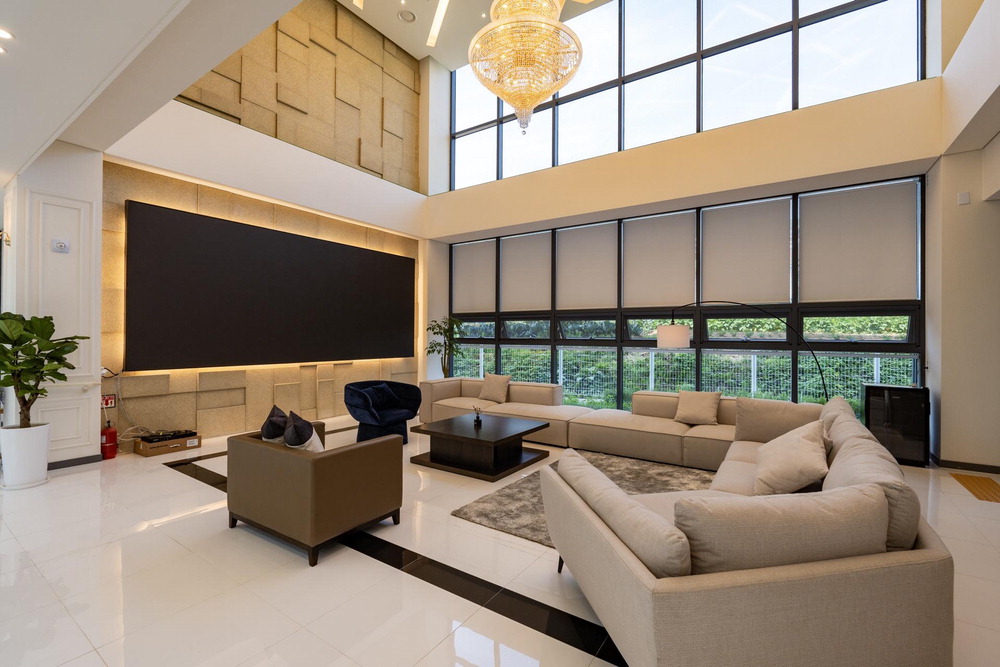

The elderly population exceeds 10 million, and senior care is emerging as a social task. This is because the supply of care workers has become insufficient due to the increase in demand for care and the shortage of care workers. There are about 3 million domestic nursing care workers who have obtained certificates, of which only 20% of the total number of field workers are active. The Korea Institute of Health Insurance predicts that by 2028, there will be a shortage of 116,000 domestic nursing care workers.
Companies that put senior care as their main business area focus on this ‘care gap’. CareDoc, a senior total care company launched in 2018, has expanded its service area to include caregiver matching, visiting care, and hospital and home care with the aim of “care that is responsible for the entire life cycle.” Recently, it has also entered the senior housing sector.
According to the “2025 Elderly Care Vacancy Index Report” released by CareDoc late last year, only 11.1% of the elderly aged 65 or older received long-term care insurance benefits in 2024. About 8.99 million elderly people were at risk of a potential care gap due to the inability to use the long-term care insurance system, up 1.9 times from 2008. Even in the late elderly over 85 years of age, the rate of recognition of long-term care insurance remains at 42%, less than half.
Lack of supply of care services is likely to lead to the burden of household care and social medical expenses. According to CareDoc, the monthly cost of care in 2024 was 4.3 million won, exceeding the average income (3.63 million won) for the first time. If housing, food, and management expenses are added, the burden of home care is much greater. The National Assembly’s Legislative Investigation Office and others predicted that the annual private care expenses in Korea will exceed 10 trillion won around 2025. The “bankruptcy of care” due to excessive burden of nursing expenses is also emerging as a social problem.

Cairdoc proposed a “care-type senior housing” as one of the solutions to the care challenges. Care-type senior housing is a residential facility model in which senior citizens who can live in daily life but need partial care can move in and receive housing and care together.
Using this model allows caregivers to spend more time on service quality management and care instead of reducing travel and waiting times. In addition, inefficient care expenses can be reduced by integrating and managing housing, food, management, welfare equipment and consumables per senior.
In fact, CareDoc is operating premium residential care facility CareDoc Care Home in Siheung, Yongin, and Yangju. Based on individual rooms for one or two people, it is a concept that combines life support such as meals, cleaning, and washing, and professional care services for 24 hours. Professional care personnel such as social workers, nursing care workers and nurses, physical therapists, and care coordinates reside, and specialized care services such as medication management and 24-hour emergency response are also provided as needed. Senior citizens aged 60 or older who need various care in their daily lives are the main targets. Unlike general senior towns, where mild cognitive impairment occurs, other facilities must be identified after leaving the hospital, Care Home customizes the level of care needed according to health changes so that they can live as long as possible.
Park Jae-byeong, CEO of CareDoc, said, “We are focusing on designing residential spaces and AI-based monitoring considering senior physical characteristics and daily life patterns to prevent dangerous situations in advance.”
Each room is equipped with a fall detection sensor, and in the event of a fall, a notification is immediately sent to CareCody’s smart watch. In fact, the tenants positively evaluated the stable environment considering the senior physical environment, such as the convenience of using the facility, heating and cooling, and safety facilities. In addition, there are specialized facilities for each branch that strengthen wellness factors such as physical therapy rooms, jjimjilbangs, and saunas.

CareDoc Care Home and Nussing Home currently operate a total of seven branches, and the occupancy rate is high at an average of more than 90%.
Balanced meals considering periodic health care and elderly health are also receiving good reviews. In fact, Lim Dong-wook (93), who lives at Yongin The First branch of CareDoc Care Home, has improved his walking ability through diet and exercise management after moving in. “In particular, care services such as resident care workers are well supported, so we are satisfied with the part that can relieve concerns about sudden health deterioration,” he said. Cairdoc is expanding its senior housing brand lineup based on operational performance. Currently under development in Gwonseon-dong, Gwonseon-gu, Suwon-si, Gyeonggi-do, the Care Home Primo plans to provide more advanced housing-based care services than existing care homes with 1 basement floor to 4 floors above ground.
This care-type senior housing model can also function as a base infrastructure for realizing a housing-based integrated care model. It can also be expected to play a role as a representative private service that can realize continuity of care within the integrated care system within the community.
Senior care company Caring also operates a residential-based care service. Through senior housing brands such as Caring Stay and Caring Village, the business is expanding in the form of a combination of day care centers and residential facilities.
Caring Stay consists of a day care center on the first floor and residential facilities on the second floor or higher. It provides customized support such as hospital accompanying, 24-hour protection, visiting care, bathing, and nursing, and provides autonomous life and care assistance for the elderly with mild symptoms. Caring Village is an urban nursing home for long-term care grades 1 and 2, increasing the proportion of care workers and operating 20 to 28 square meters of private rooms. It also includes a 24-hour emergency response and wellness program.
Caring opened three branches in Hwaseong, Pocheon, and Anyang last year, and plans to expand to Byeolnae and Incheon this year. Caring is building a direct residential and integrated care model similar to CareDoc’s Care Home.
However, some point out that in order to revitalize the related market, the basis of the realistic system, including establishing operating standards, should be clearer. It is predicted that it will help expand the base of the market itself if an institutional mechanism is prepared to select operators who meet the qualifying criteria.
“Care-type senior housing should be supported by service quality, safety standards, and the deployment of professional personnel beyond a simple real estate development perspective,” said Park Jae-byung, CEO of CAREDAC. “If we discover and nurture private companies that have accumulated field-based operating capabilities, we can grow into a private housing-care model that relieves the burden of public care in the future.”
[Reporter Lee Hojun]