Natalie Scott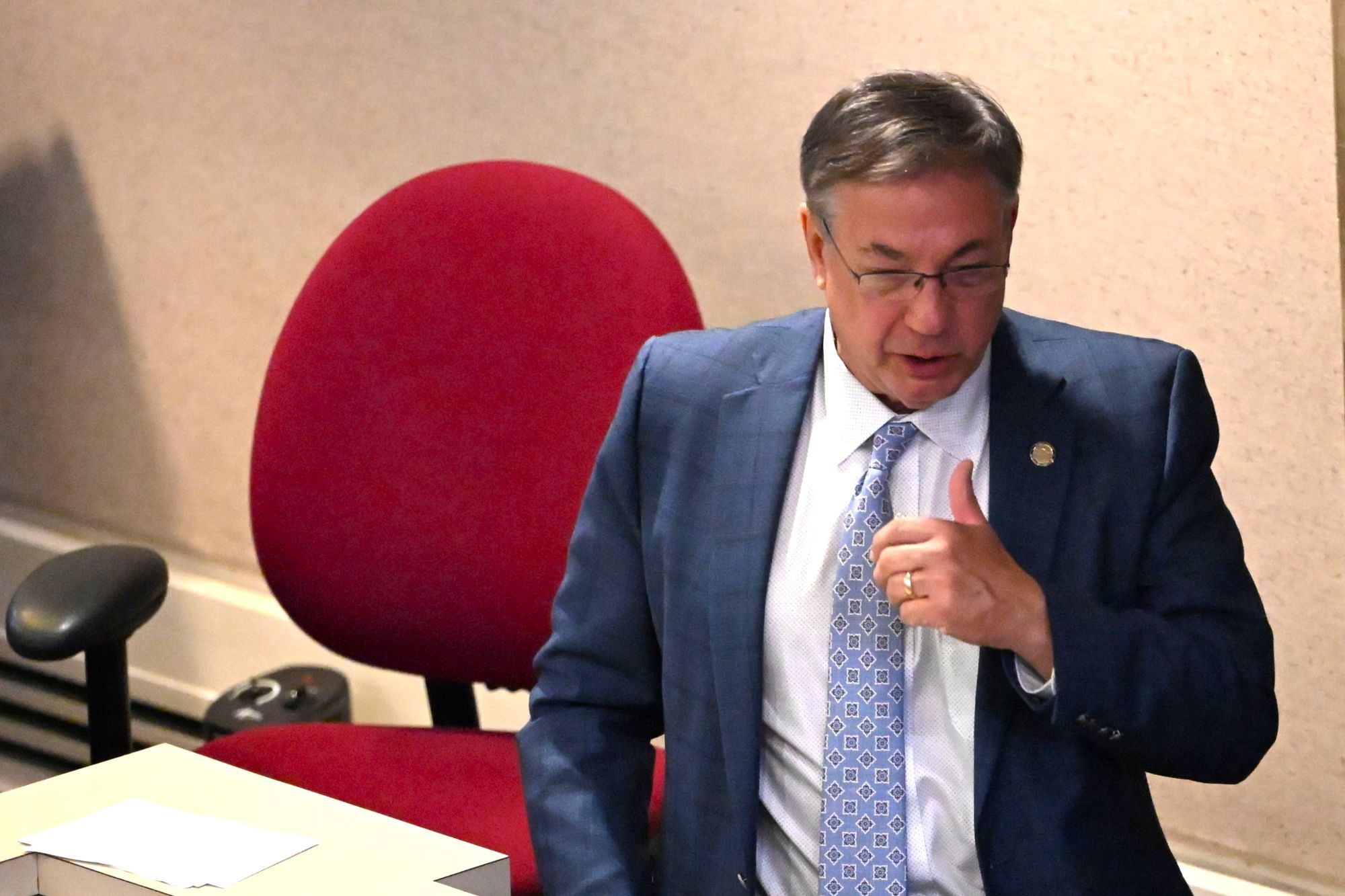
The Alabama Legislature on Wednesday passed a bill that would effectively put the state’s public utility regulation board under the control of the governor.
Passage of HB 475, sponsored by Rep. Mack Butler, R-Rainbow City, came over Butler’s objections to major Senate changes to the bill that removed provisions that would have required regular hearings in which utilities would be required to justify rate increases.
In a highly unusual move, the Alabama House defeated Butler’s motion to send the bill to a conference committee for further negotiations and concurred in Senate changes on a 72-26 vote, with Butler voting against the motion. Butler said in an interview after the vote that while he is disappointed the House did not support him, he is optimistic that changes could be made in a future session.
GET THE MORNING HEADLINES.
“We’re gonna be able to fight another day,” he said. “This isn’t the end of any of this. Man, I can come back and drop another bill, first thing next session. This one came out of nowhere. It was not on my radar screen, but I saw a problem, and I tried to jump in and fix it.”
In a joint statement released Wednesday night, House Speaker Nathaniel Ledbetter, R-Rainsville, and Senate President Pro Tem Garlan Gudger, R-Cullman, celebrated the Legislature’s unity in passing the bill.
“The Alabama House and Senate stood united to reform how utilities are regulated and demand an unprecedented amount of accountability for consumers across the state,” the statement said. “At a time when more than $30 billion in rate increases are pending in states across the country, the Legislature took strong action to protect and shield Alabamians from higher rates for the next several years.”
Butler said prior to the House vote Wednesday that he would not vote for the Senate version of the bill.
“I want my hammer back,” Butler said. “I would like to see a rate cap, and I’d like to see regional and national limits of where the rates can be. That would trigger an automatic formal rate hearing, under oath, under penalty of perjury, and with subpoena power with the Public Service Commission.”
Butler said that if those changes are not made, he would not vote for his own bill and would ask House members to do the same.
“I’m hoping we can, I’m very optimistic that we can negotiate that, but at the end of the day, if not, I will be voting no on the bill that has my name on it,” Butler said.
Butler’s motion to negotiate the bill was tabled on a motion by Rep. Ivan Smith, R-Clanton. Smith then moved to accept the Senate changes.
High electricity rates

Butler’s bill, aimed at addressing Alabama’s region-leading electricity rates, required the Alabama Public Service Commission to hold formal rate case hearings every three years. The PSC has not held a hearing like that — requiring sworn testimony and utilities to prove the reason for rates — since 1981. The commission instead uses a process known as rate stabilization and equalization that guarantees utilities a return. Critics say it locks out the public and makes the reason for electricity rates impossible to determine.
Alabama has some of the highest electricity rates in the South. According to the U.S. Energy Information Administration, Georgia’s average residential energy prices in January were 14.46 cents per kW/hr in January, compared to 16.06 cents per kW/hr in Alabama. Concerns over power bills led to the election of two Democrats to the Georgia Public Service Commission last year, the first time Democrats won election to a state position in Georgia since 2006.
The Senate’s changes mirror SB 360, sponsored by Sen. Clyde Chambliss, R-Prattville. The new bill requires five of the seven members of an expanded PSC to vote to hold formal rate hearings, and put the whole commission under the authority of a secretary of energy, appointed by the governor. The secretary of energy could also order a formal rate case hearing.
“It requires an additional public annual public hearing, and then adds some triggers for additional formal hearings that are in addition to the ones that they are the one that they already have,” Chambliss said.
The annual hearing would not require testimony under oath, like a formal one.
Chambliss’ bill would change the Public Service Commission from a president and two commissioners elected at-large from the state to seven members, each elected from a congressional district.
The bill would also allow Gov. Kay Ivey to appoint four new members of the PSC prior to November’s elections, which could cancel out the elections of PSC members who may seek formal rate case hearings.
The most recent version of HB 475 incorporates all the major provisions of SB 360, which requires that public utilities not increase the retail base rates on customers until 2029. The legislation extends a rate freeze that was already ordered by the PSC in December at the request of Alabama Power.
The Senate also adopted an amendment Wednesday offered by Sen. Rodger Smitherman, D-Birmingham, that requires two of the governor’s appointees to be selected from a list provided by the minority leaders of the Legislature. The amendment was adopted 31-0.
Daniel Tait, executive director of Energy Alabama, said in a statement Wednesday evening that the HB 475 that the Senate passed Wednesday is SB 360 in disguise.
“What passed today eliminates mandatory rate hearings. It removes profit limits. It creates a Governor-appointed Secretary of Energy who controls the Public Service Commission’s agenda, its staff, and the scope of any rate review — effectively handing a political appointee a veto over your electric bill,” Tait said. “Completely rewriting a bill and passing it through the entire Senate in less than 48 hours is not consumer protection. It’s Alabama Power protection.”
A message seeking comment from Alabama Power was left Wednesday evening.
There are five days left in the 2026 legislative session.
This story was updated Wednesday at 8:46 p.m. to include a joint statement from House Speaker Nathaniel Ledbetter, R-Rainsville, and Senate President Pro Tem Garlan Gudger, R-Cullman.
Independent Journalism for All
As a nonprofit newsroom, our articles are free for everyone to access. Readers like you make that possible. Can you help sustain our watchdog reporting today?