Lily Maxwell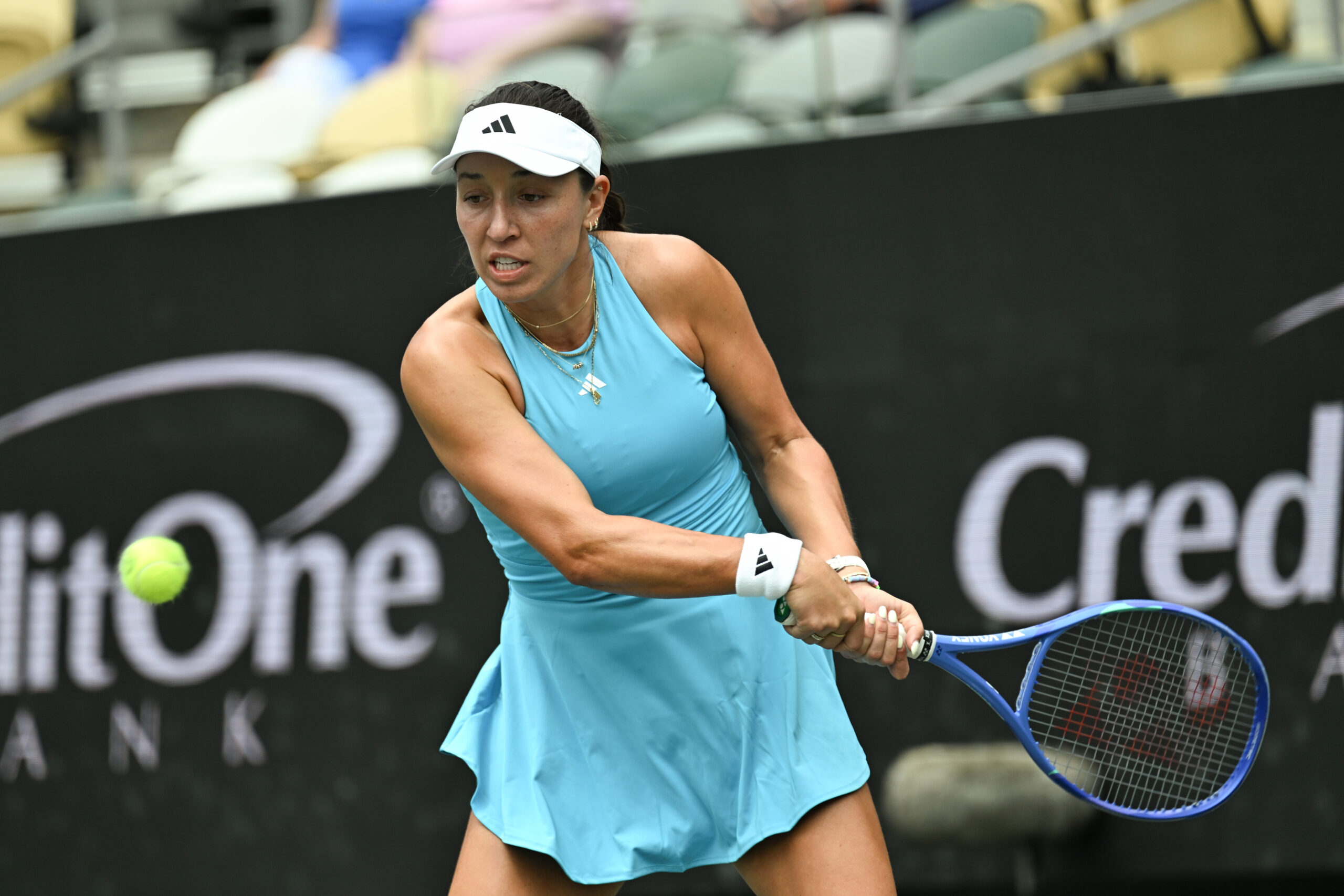
Jessica Pegula’s title defense at the Credit One Charleston Open continued to take the scenic route on Friday. For the third time in as many matches this week, the No. 1 seed had to come from a set down and then a break down in the third set, eventually quelling Diana Shnaider 3-6, 6-3, 6-2 in 2 hours and 10 minutes.
Charleston: Scores | Draws | Order of play
Pegula had already overturned third-set deficits of 2-0 against Yulia Putintseva in the second round and 4-1 against Elisabetta Cocciaretto in the third round. Against Shnaider, she had to withstand a series of crowd-pleasing hot shots from the surging No. 7 seed before reeling off the last six games in a row from 2-0 down in the decider.
Pegula’s third-set numbers are boosted once again with the result. She’s 9-1 in three-set matches in 2026 now, and 18-4 since the US Open. She advances to her fourth semifinal in six tournaments this year, where she will face No. 4 seed Iva Jovic, who Pegula most recently beat in Dubai.
“Honestly, I didn’t think I had any more lives left there for a bit,” Pegula said in her on-court interview. “I was getting really frustrated, it was very slow and wet and muggy and I felt like the ball wasn’t going anywhere. I got really mad at myself at the end of the first. I feel like it’s been the same the last few matches — I’ve just been able to hold on to my serve, find some rhythm and serve really well, and then just find ways to break. At the end of the third I started to step in a little bit better and play more aggressive.”
Interestingly, Pegula — the top seed — had said she was given the option of playing first or second on Stadium Court Friday afternoon from the Charleston tournament director, and she elected to go for the former. It was a decision that in hindsight she slightly regretted as wear and tear from her matches was catching up.
“It was funny, I chose to be first on today, and I woke up this morning kind of regretting it a little bit because I was like, ‘Ugh. I wish I could sleep for a couple more hours with the somewhat quick turnaround from yesterday,'” Pegula said to press. “But my recovery process, it stays the same, especially if I’m in kind of a routine. I would say the only thing is if there’s something bother you, then obviously you play more attention to that, but it’s pretty much the same.”
The match in a nutshell: The match could be encapsulated by a two-game run midway through the second set.
Shnaider, serving down 2-1, battled through one of the best games of the tournament to hold for 2-2. The 22-year-old navigated seven deuces and saved four break points — one with a service winner, two with one-two punches, and another with arguably the point of the entire week. That one saw her show off her speed in tracking down a Pegula lob and flicking a deep response, and her touch on the run on the nvery next shot as she conjured up a winning counter-drop at full stretch.
That felt like a crucial hold to maintain the momentum Shnaider had built from a bravura first set in which she had found 12 winners to just four unforced errors. But Pegula snuffed out any meaning it may have had with a rapid, fuss-free hold to love in the very next game — immediately returning the scoreboard pressure to Shnaider.
Two games later, that pressure told. Shnaider’s forehand began to misfire, and Pegula claimed the decisive break for 5-3.
Shnaider’s 2-0 lead in the third set also proved to be a false dawn. She had got there after struggling through a pair of multi-deuce tussles as both players’ form dipped at the start of the decider. But the World No. 19’s free-flowing form of the first two sets had deserted her, and the unforced errors began to mount up — 15 in the third set, compared to 13 in the first two combined.
Despite Pegula’s marathon route to the quarterfinals, it was Shnaider who visibly faded as the match drew on. She sent a forehand long to gift the break back, netted a backhand to drop serve at 2-2, and went down a double break thanks to a backhand over the baseline.
“Today I was thinking of what I need to do better from yesterday, like what are things I need to work on on the clay,” Pegula said to press. “Of course, I’m working on winning the match. But when I’m kind of thinking about those things, it does help me play better, and I felt like some of that showed today, especially in the third set. I started moving through the ball a little bit better, taking the ball a little bit earlier, playing more inside the court.”
Pegula, by contrast, was able to elevate her game in the most important moments — not least at 3-2, when she found a brilliant backhand down the line to save the second of two break-back points.
Shnaider still had a touch of magic left in the home stretch, saving the first three match points against her — the third with another wild all-court exchange that had the crowd on its feet. Once again, Pegula was unfazed. Two service winners later, and another masterclass of scoreboard management was hers.