Lily Maxwell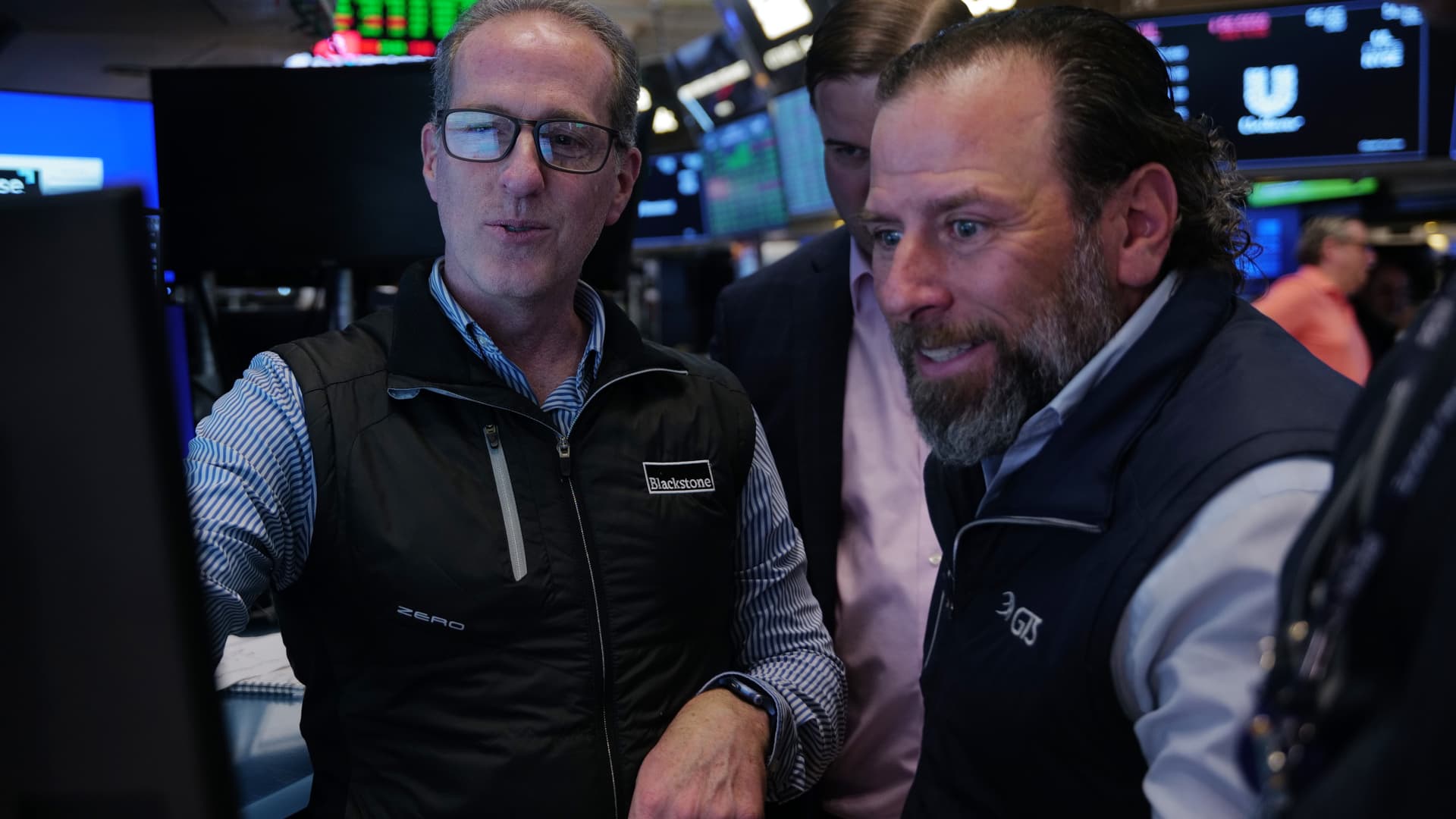
Traders work on the floor of the New York Stock Exchange (NYSE) on March 31, 2026 in New York City.
Spencer Platt | Getty Images
The S&P 500 rose on Monday for a fourth session as oil prices teetered and traders hoped that the U.S.-Iran war could end soon.
The broad market index added 0.44% to close at 6,611.83, while the Nasdaq Composite gained 0.54% and ended at 21,996.34. The Dow Jones Industrial Average climbed about 165.21 points, or 0.36%, to settle at 46,669.88.
Axios reported that the U.S., Iran, and a group of regional mediators were discussing terms for a potential 45-day ceasefire that could lead to a permanent end to the war, though the chances for reaching a partial deal before the Tuesday deadline were slim. To be sure, a 45-day ceasefire is just one of the many ideas being floated.
Reuters also reported that Iran and the U.S. have received a plan to end hostilities that, if agreed, would result in an immediate ceasefire and the reopening of the Strait of Hormuz. The framework, which could come into effect on Monday, was put together by Pakistan, an unnamed source told Reuters.
President Donald Trump echoed his stance on Monday that the U.S. will destroy Iran’s power plants and bridges if the Middle Eastern country does not reopen the Strait by 8 p.m. ET on Tuesday. He had warned about striking that infrastructure on Sunday.
The president also said that while he wants to take Iran’s oil, he “won’t go further.”
“What would I like to do? Take the oil, because it’s there for the taking,” he continued. “There’s not a thing they can do about it. Unfortunately, the American people would like to see us come home.”
Oil prices whipsawed in volatile trading at the start of the week. The U.S. West Texas Intermediate contract for May ticked up 0.78% to close at $112.41 per barrel. International benchmark Brent crude prices edged 0.68% higher to settle at $109.77 per barrel.
The CBOE Volatility Index, or VIX, similarly remained elevated following Trump’s comments. It was last above 24.
“The market may be underestimating the magnitude of the disruption in the world economy,” said Michael Rosen, chief investment officer at Angeles Investments. The “immediate and intermediate impact of the energy disruption is, I think, likely to be under appreciated by the markets, meaning energy prices staying higher for longer.”
Correction: The S&P 500 rose 3.4% last week. A previous version misstated the gain.